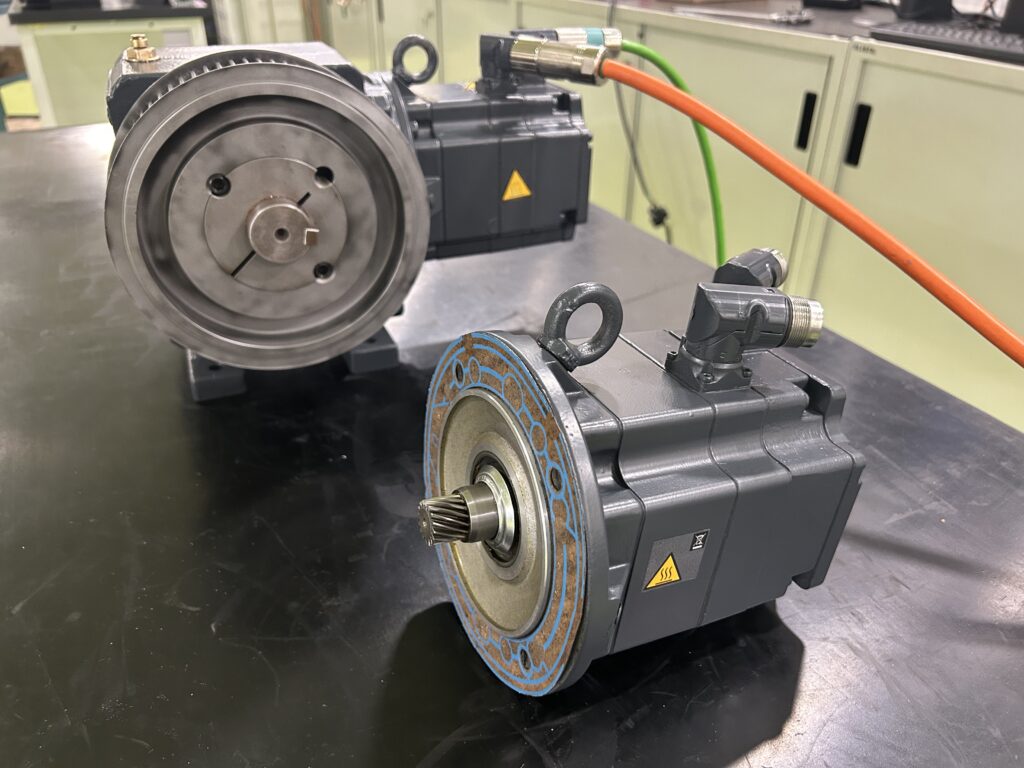
In an industrial world increasingly defined by efficiency, reliability, and sustainability, maintenance strategies must evolve beyond quick fixes and short‑term solutions. When servo motors and drives are repaired by experienced and professional specialists, repair becomes far more than a corrective action — it becomes the most intelligent and sustainable maintenance strategy, and a powerful source of technical knowledge for future generations.
Repair Based on Experience and Deep Technical Analysis
Servo motors and drives are complex, high‑precision systems that integrate mechanical components, power electronics, feedback devices, and control electronics. Proper repair requires far more than component replacement.
When repairs are carried out by specialized companies with many years of hands‑on experience, every intervention is guided by:
- Profound understanding of servo system behavior
- Detailed analysis of each individual component
- Identification of the root cause, not just the visible failure


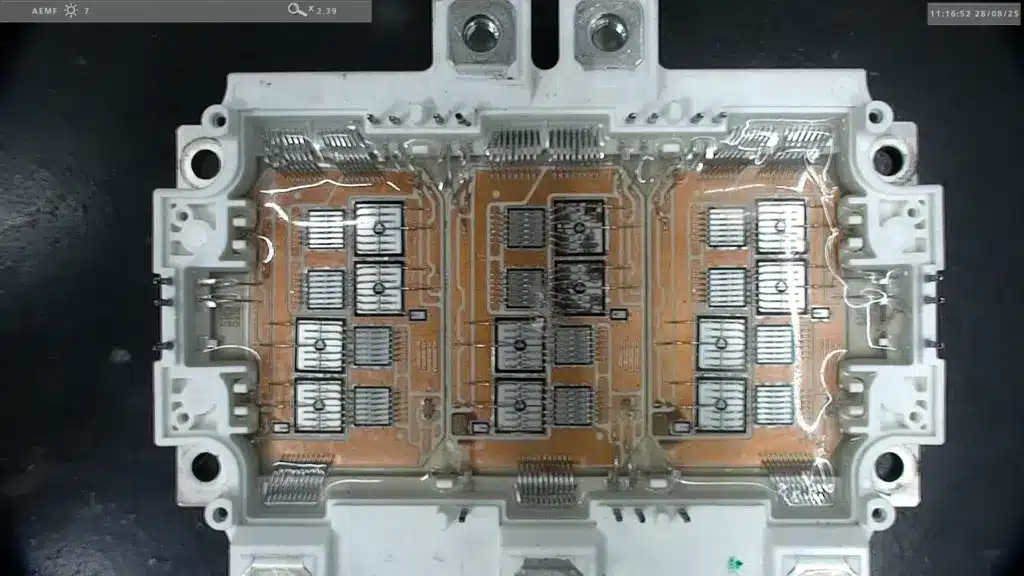
Whether working on a servo motor (bearings, windings, encoder, brake, rotor balancing) or on an electronic drive PCB (power modules, control circuits, protection components, solder joints), professional repair is built on methodology, measurement, and knowledge accumulated over decades.
Restoring Reliability Through Knowledge‑Based Decisions
Professional repair does not aim merely to restore functionality. Its true objective is to recover original performance and ensure long‑term reliability.
By carefully analyzing each component and failure mode, expert repair workshops can:
- Detect progressive degradation before catastrophic failure
- Prevent recurring issues
- Provide valuable technical feedback to improve machine operation
- Reduce unplanned downtime and maintenance costs
This transforms repair into a strategic maintenance tool rather than a reactive necessity.


The Most Rational Economic Choice
From an economic perspective, professional repair is often the most logical decision:
- Significantly lower cost compared to full replacement
- Shorter lead times, especially for obsolete or long‑delivery equipment
- Reduced production interruptions
When repairs include functional testing, calibration, and quality control, they deliver high reliability without compromise.


Sustainability with Real Industrial Impact
Servo motors and drives contain valuable and finite resources such as high‑quality copper, permanent magnets, and sophisticated electronic components. Disposing of these systems prematurely contributes directly to electronic waste and unnecessary resource consumption.
Choosing repair over replacement: ♻️ Reduces electronic waste ♻️ Conserves raw materials and energy ♻️ Supports circular‑economy principles in industry
Sustainability in maintenance is no longer optional — it is a strategic responsibility.

Passing Knowledge to the Next Generation of Engineers
One of the often‑overlooked values of professional repair is its role in knowledge preservation and transfer. Experienced repair specialists possess practical insight that cannot be learned solely from textbooks or simulations.
By repairing real industrial failures and analyzing real root causes, this expertise becomes an invaluable learning platform for young engineers:
- Understanding how and why systems fail in real applications
- Linking design theory with practical limitations
- Learning diagnostic thinking and structured problem analysis
- Appreciating the importance of sustainable engineering decisions
Repair workshops are not just service providers — they are technical knowledge hubs, helping shape more capable, responsible, and sustainability‑minded engineers for the future.

Conclusion
When servo motors and drives are repaired by experienced, professional companies, repair becomes much more than a technical service.
It is a knowledge‑driven, economically sound, and environmentally responsible maintenance strategy, and a powerful way to pass real‑world engineering expertise to the next generation.
► Repair with expertise
► Extend asset life
► Reduce environmental impact
► Educate future engineers
Professional repair is not only about keeping machines running — it is about building a smarter and more sustainable industrial future.